
Morpheus8 is one of the most effective treatments we offer for skin tightening and texture improvement — but the treatment itself is only half the equation. What you do in the days and weeks afterward plays a real role in how smooth, even, and long-lasting your results end up being.
For anyone newer to the treatment: Morpheus8 is a radiofrequency (RF) microneedling device that creates controlled micro-channels in the skin while simultaneously delivering RF energy deep into the tissue. This dual action triggers your body’s natural collagen and elastin production, which is what ultimately tightens skin and improves texture over time. Because it works by creating a controlled injury that your skin then heals from, the recovery period isn’t just a formality — it’s an active part of how the treatment actually works.
If you just had Morpheus8 on your face or Morpheus8 Body treatment, here’s a full breakdown of what to expect immediately afterward, the five things our physicians recommend for the weeks that follow, and the mistakes that most commonly undercut results.
What to Expect in the First 24–72 Hours
Right after treatment, it’s normal to look and feel like you’ve spent a bit too long in the sun — redness, warmth, and tightness in the treated area are expected, along with tiny pinpoint marks where the needles penetrated the skin. Some patients also notice mild swelling, especially around the eyes if treating the face, or in areas with thinner skin.
This typically peaks within the first 24 hours and begins improving within 2–3 days. Makeup is generally not recommended during this window (see the FAQ below for specifics), and skin may feel rough or slightly bumpy to the touch as it begins to heal — that texture change is a normal part of the process, not a sign anything went wrong. If you notice anything that feels excessive — significant swelling, signs of infection, or pain that worsens rather than improves — contact our office directly rather than waiting it out.
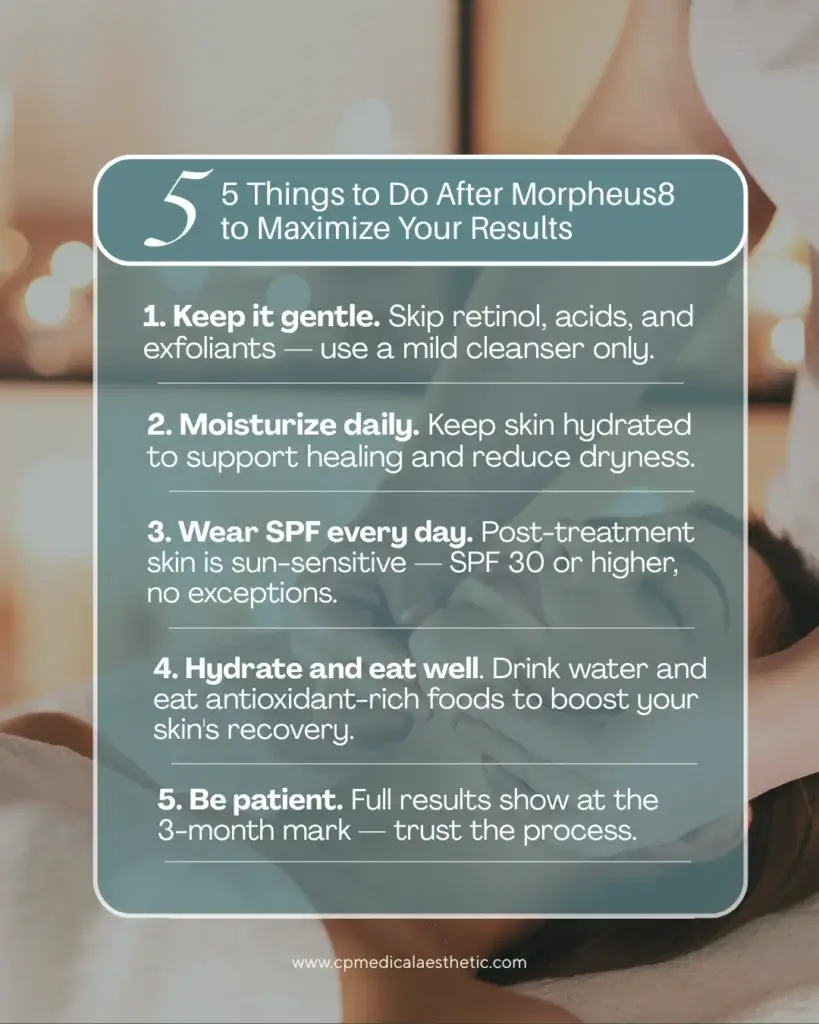
5 Things to Do After Morpheus8 to Maximize Your Results
1. Keep It Gentle
Skip retinol, acids (glycolic, salicylic, lactic), and any exfoliating products for at least several days post-treatment — your physician will give you a specific timeline based on your treatment intensity. Your skin has just undergone controlled micro-injury to stimulate collagen, and active ingredients that are normally great for your skin can cause irritation or interfere with healing right now, since the skin barrier is temporarily more permeable and sensitive than usual.
Stick to a mild, fragrance-free cleanser until your provider clears you to resume your normal routine. This also means holding off on other active treatments — chemical peels, additional microneedling, or laser treatments — until your skin has fully recovered from this one. Layering active treatments too soon doesn’t speed up results; it just increases irritation risk.
2. Moisturize Daily
Keeping skin hydrated supports the healing process and helps reduce the dryness and flaking that can show up as your skin recovers. A simple, gentle moisturizer applied consistently — not just when skin feels dry — helps the healing process move along smoothly and keeps you comfortable in the meantime.
Look for fragrance-free formulas with simple ingredient lists rather than anything marketed as “active” or “treatment” during this phase — the goal right now is supporting the skin barrier, not introducing new ingredients it has to adjust to. If your skin feels unusually tight or uncomfortable despite regular moisturizing, that’s worth mentioning at your follow-up rather than just pushing through it.
3. Wear SPF Every Day, No Exceptions
This is the one patients underestimate most. Post-Morpheus8 skin is significantly more sun-sensitive, and unprotected sun exposure during healing increases the risk of pigmentation issues and can undermine the results you just paid for. SPF 30 or higher, reapplied if you’re outside for extended periods, isn’t optional — it’s part of the treatment.
This matters even more if you’re treating in summer, when sun exposure is harder to avoid. If you’re also considering other skin treatments this season, the same sun-protection rule applies across the board.
4. Hydrate and Eat Well
What you put into your body matters almost as much as what you put on it. Drinking enough water and eating antioxidant-rich foods (think berries, leafy greens, and other produce high in vitamins C and E) gives your skin the building blocks it needs to repair and produce new collagen efficiently. This isn’t a strict diet requirement — it’s just giving your body what it needs to do its job well.
It’s also worth limiting alcohol and excess sodium in the first few days, since both can contribute to swelling and dehydration — two things you’re actively trying to minimize during recovery. None of this needs to be extreme; small, consistent choices over the healing window add up more than any single “perfect” day.
5. Be Patient — Full Results Take About 3 Months
This is the step people struggle with most. Morpheus8 doesn’t deliver instant results the way a filler might. Collagen remodeling is a gradual process, and most patients see continued improvement over a period of weeks, with full results typically visible around the three-month mark. If your skin looks good two weeks in, that’s a great sign — but the real transformation is still ahead. Trust the process and resist the urge to judge your results too early.
Common Mistakes That Undercut Morpheus8 Results
A few avoidable habits tend to come up again and again with patients who feel disappointed by results that, in reality, just needed more time or care:
Judging results too soon. Comparing your skin at the two-week mark to “before” photos and concluding the treatment didn’t work is one of the most common mistakes — most of the visible improvement is still ahead of you at that point.
Skipping SPF on cloudy or cooler days. Sun damage doesn’t require direct sunlight or heat to occur, and skipping SPF because “it’s not that sunny out” is a common way patients unintentionally undo progress.
Resuming actives too early because skin “looks fine.” Skin can look healed on the surface while still rebuilding underneath — going back to retinol or acids before your provider clears you risks irritation precisely when your skin is most vulnerable.
Treating it as a one-and-done fix. Morpheus8 delivers real, lasting improvement, but it doesn’t stop the natural aging process. Most patients maintain results with periodic touch-up sessions, which your physician can advise on based on your skin and goals.
Morpheus8 Face vs. Morpheus8 Body: Does Aftercare Differ?
The core principles above apply to both, but there are a few practical differences worth knowing. Facial treatment areas are more visible day-to-day, so patients tend to notice redness and texture changes more acutely — and makeup avoidance is more of an adjustment since it’s a part of most people’s daily routine. Body treatment areas, by contrast, are easier to keep covered and protected from friction, but clothing choice matters more: loose, breathable fabric over the treated area helps avoid irritation that tighter clothing can cause during healing.
SPF matters for both, but it’s easy to forget on treated body areas that aren’t usually top-of-mind for sun protection, like the abdomen, thighs, or upper arms. If you’re treating both face and body in the same season, it’s worth applying the same sun-protection discipline to both areas rather than only remembering it for your face.
Wondering If Morpheus8 Is Right for You?
If you haven’t had Morpheus8 yet but you’re dealing with skin laxity, uneven texture, or early signs of aging, it’s worth a conversation with one of our physicians to see if it’s the right fit — sometimes a different treatment, or a combination approach, makes more sense depending on your skin and goals. You can browse our full range of face treatments or explore our injectables if you’re comparing options.
Frequently Asked Questions
How long does it take to see results from Morpheus8?
Initial improvement in skin texture and tone is often visible within a few weeks, but full collagen remodeling continues for about three months. Most patients see their best results at the 90-day mark.
Can I wear makeup after Morpheus8?
Most providers recommend waiting at least 24–48 hours before applying makeup, depending on how your skin is healing. Your physician will give you specific guidance based on your treatment.
Is Morpheus8 painful, and what's the downtime?
Most patients describe mild discomfort during treatment, managed with topical numbing. Downtime is typically minimal — some redness and mild swelling for a few days — though this varies based on treatment depth and the area treated.
Where can I get Morpheus8 near Clifton Park, NY?
Clifton Park Medical Aesthetic, located at 805 NY-146, offers physician-led Morpheus8 treatments for face and body, serving patients throughout Halfmoon, Ballston Spa, Malta, Saratoga Springs, Niskayuna, and Schenectady.
Have Questions About Your Morpheus8 Recovery?
If anything feels off during your healing process, don’t wait — reach out to our team directly. And if you’re due for your next treatment or considering Morpheus8 for a new area, we’re happy to help you plan it out.